Industry lists are a foundational asset for B2B and B2C teams aiming to scale outreach, sharpen targeting, and improve conversion rates.
Whether you’re building prospect lists, supplier directories, or compliance-ready vendor rosters, a well-structured industry list transforms raw data into actionable leads and measurable results.
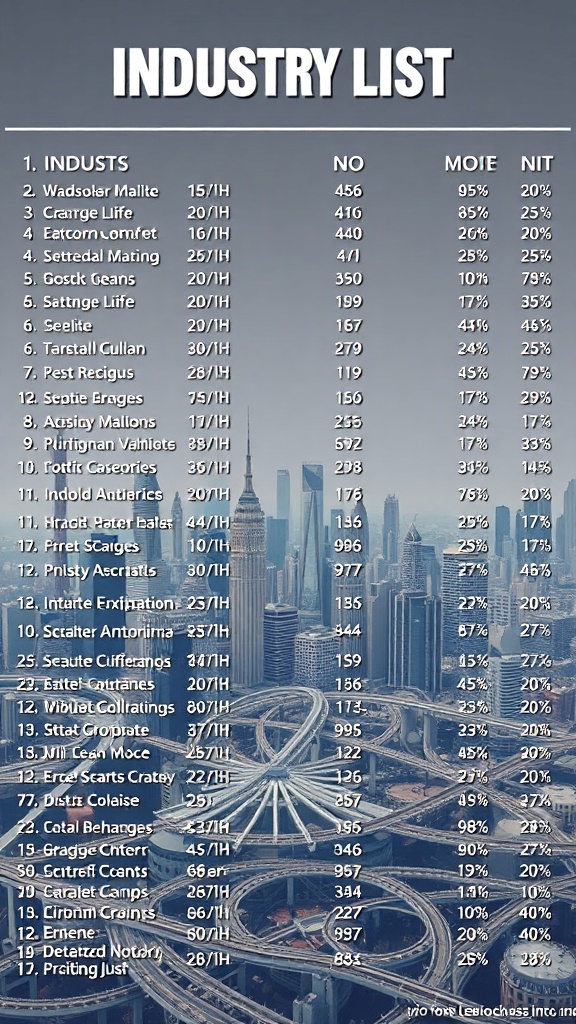
Why industry lists matter
– Precision targeting: Industry lists let teams focus on the right sectors, company sizes, and roles, increasing relevance and response rates.
– Faster sales cycles: Clean, qualified lists reduce time wasted on unqualified leads and accelerate pipeline velocity.
– Better personalization: Segmented lists enable tailored messaging that resonates with specific pain points and buying stages.
– Risk management: For procurement and compliance, accurate lists help track certifications, sanctions, and contractual obligations.
Types of industry lists
– Top-funnel prospect lists: Broad industry and firmographic filters to fuel outreach campaigns.
– Account-based lists: Smaller, highly curated lists for targeted, multi-touch ABM strategies.
– Supplier and vendor rosters: Operational lists used for procurement, vendor risk, and auditing.
– Compliance/suppression lists: Records used to avoid regulated entities or manage opt-outs.
How to build high-performing industry lists
1. Define the Ideal Customer Profile (ICP)
Start with a crystal-clear ICP: industry codes (SIC, NAICS), company revenue, employee count, tech stack, geography, and decision-maker titles. The clearer the ICP, the more efficient your list-building.
2. Source data responsibly
Combine first-party signals (website signups, event attendees, customers) with reputable third-party providers and intent data.
Use APIs and platform integrations rather than scraping, and validate source quality before buying.
3. Enrich and verify
Append firmographics, contact details, technographics, and intent scores. Verify emails and phone numbers to reduce bounce rates. Add contextual fields like purchase triggers, recent funding, or regulatory events to prioritize outreach.
4.
Segment for relevance
Create segments by industry, company size, buying intent, and role. Tailor sequences and content to each segment to improve engagement and conversion.
5. Maintain list hygiene
Remove duplicates, flag role changes, and suppress unsubscribes. Frequency depends on churn: high-turnover markets need more frequent cleaning. Keep a versioned audit trail for transparency.
6.
Ensure compliance and consent
Obtain proper consent for outreach, honor opt-outs, and use suppression lists diligently. Align practices with relevant privacy laws and industry regulations and document your data handling policies.
7.
Integrate with your stack
Sync lists with CRM, marketing automation, and ABM platforms to enable seamless workflows. Use tracking to follow through from outreach to closed deals.
Metrics to track
– Data health: email deliverability, phone validation rates, accuracy of firmographics
– Engagement: open rates, reply rates, meeting conversion rate
– Business outcomes: pipeline created, opportunity-to-close rate, cost per lead
– List ROI: revenue attributed to list-driven activity versus acquisition costs
Common pitfalls to avoid
– Relying solely on purchased lists without enrichment or verification
– Overly broad lists that dilute personalization
– Ignoring consent and suppression requirements
– Failing to reconnect stale contacts with re-permission campaigns
Actionable next steps
Audit current lists for accuracy, define or refine the ICP, and run a small pilot segment to measure baseline metrics.
Use iterative testing to optimize segmentation and messaging. Maintaining list quality is an ongoing process that pays dividends in faster sales cycles, higher conversion, and lower acquisition costs.
